
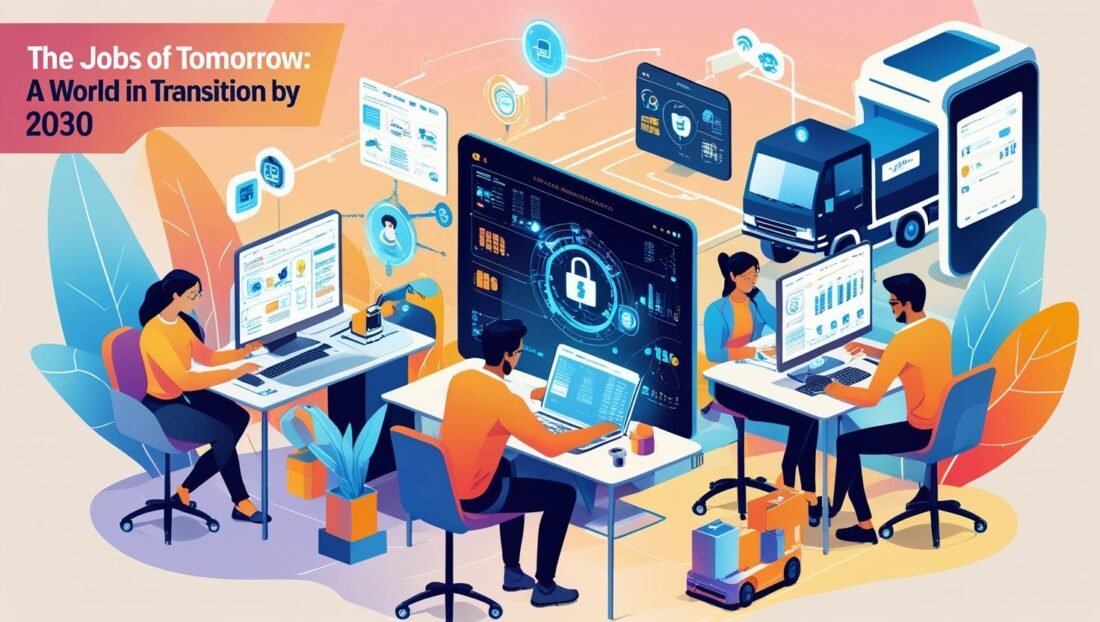
By 2030, the global workplace will look vastly different from what we know today. As technology, automation, and artificial intelligence continue to reshape industries, some jobs will soar in demand, while others will quietly disappear.
A new study by the World Economic Forum highlights this dramatic shift. At the heart of the change lies one word—data.
Big data specialists, AI and machine learning experts, and software developers are projected to be the stars of the future economy. As businesses compete to harness information and automate processes, these skills will become indispensable.
Among the fastest-growing roles are fintech engineers, who will ride the wave of digital finance, and cybersecurity specialists, who will guard an increasingly vulnerable digital world. Specialists in autonomous and electric vehicles will drive forward the future of mobility, while UI/UX designers will shape how humans interact with technology in ways that feel natural and intuitive. Even traditional jobs like delivery drivers will evolve, as logistics adapts to electric fleets and smarter navigation systems.
But while new opportunities rise, many familiar jobs will decline. Postal clerks, bank tellers, and data entry clerks—once considered pillars of routine work—are among the fastest-disappearing roles. Automation, self-service systems, and digitization are making these roles redundant. Even sectors like cashiering, administrative assistance, and bookkeeping will shrink under the shadow of AI and digital platforms.
The ripple effects extend further. Printing trades, stock-keeping clerks, and even transport attendants are on the decline as industries embrace automation and efficiency.
The empty office chair in today’s workplace tells the story: tomorrow’s jobs won’t look the same. For workers, this transformation poses both a challenge and an opportunity. Skills, adaptability, and a willingness to embrace technology will be the keys to survival—and success.
As one industry expert puts it, “The future of work will not be about humans versus machines—it will be about humans working with machines.” By 2030, the ladder of opportunity will have been rebuilt, with tech-driven roles at the top and outdated clerical jobs fading into history.