From Tagore’s Ideals to NEP 2020: How RTU is Emerging as a Hub of Innovation and Inclusivity
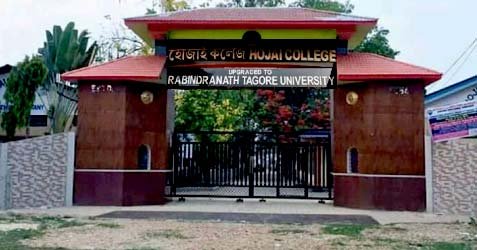
Rabindranath Tagore University (RTU), Hojai, established in 2019, is one of Assam’s youngest universities, envisioned as a hub of holistic education inspired by the ideals of Nobel Laureate Rabindranath Tagore.
Rooted in Tagore’s philosophy of harmonizing intellect with creativity and culture, RTU has been steadily expanding its academic programs across sciences, humanities, and professional disciplines. The university emphasizes research, innovation, and value-based learning while remaining deeply engaged with its diverse local community through cultural initiatives and social outreach. Within a short span, RTU has emerged as a promising centre of learning and development in the Northeast.
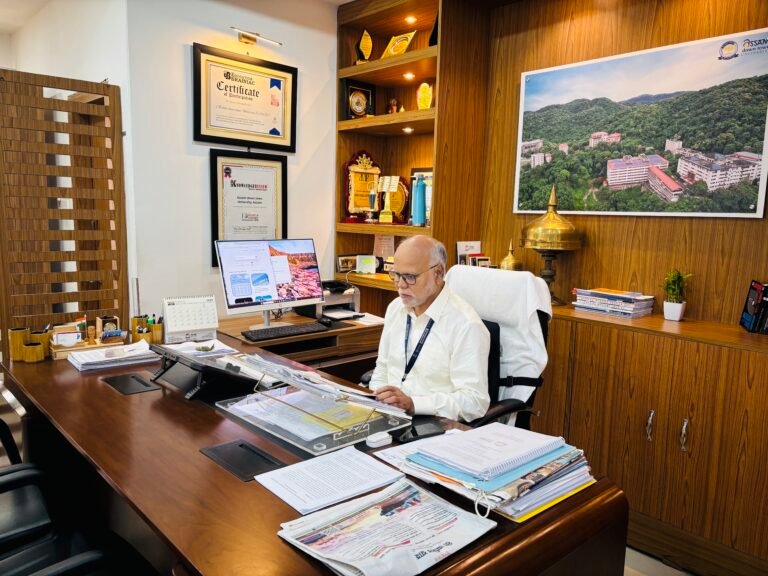
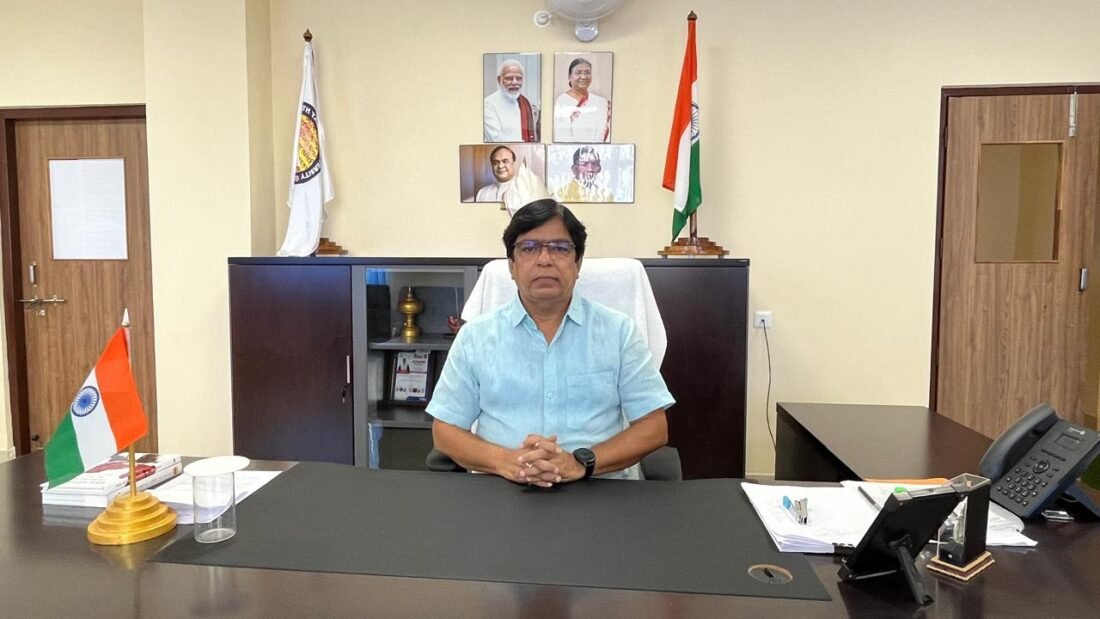
In this context, EduNe spoke with the Vice-Chancellor of RTU, Prof. Manabendra Dutta Choudhury, who shared his vision for the university, experiences that shaped his leadership, and priorities for the future.
- Experiences as a Commonwealth Fellow and Fellow of the Royal Society of Biology
My experiences as a Commonwealth Fellow and a Fellow of the Royal Society of Biology have significantly shaped my leadership at RTU. These global exposures deepened my understanding of research ecosystems, interdisciplinary collaboration, and institutional governance. They reinforced the importance of quality, innovation, and inclusivity in higher education. At RTU, I draw upon these learnings to strengthen research culture, promote international collaborations, and foster a forward-looking academic environment.
- Education as Harmony with Existence – Philosophy in Practice
I strongly believe that education must harmonize with existence, nurturing both intellectual and emotional growth. At RTU, we integrate this philosophy through value-based education, emphasis on holistic learning, and a curriculum that balances tradition with modernity. Our programs encourage respect for culture and environment while preparing students with the skills and competencies required in the 21st century.
- Motivation Behind New Academic Programs (2025–26)
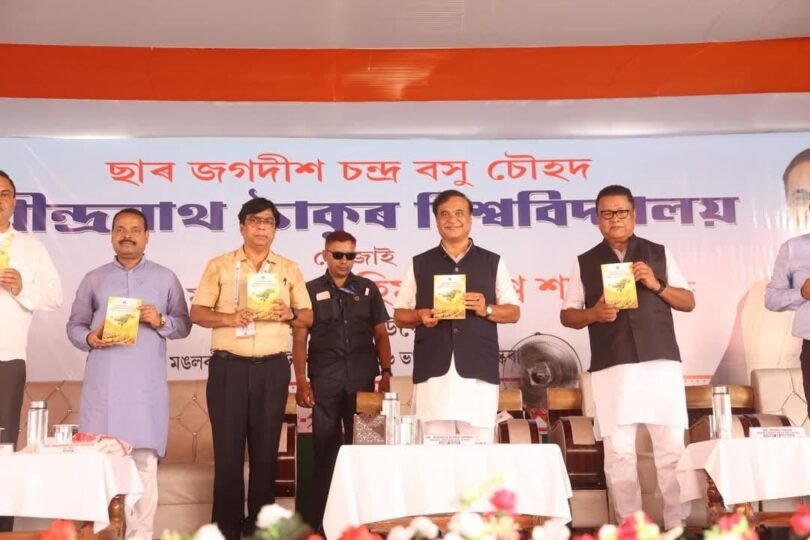
The introduction of new programs—such as the integrated BBA–MBA, M.A. in Sociology, and B. Pharm.—was motivated by the evolving needs of society, students, and industry. These programs align with national priorities, including NEP 2020, and cater to emerging career opportunities in management, social sciences, and healthcare. They ensure that RTU remains responsive to both regional aspirations and global demands.
- Implementation of NEP 2020 and Long-Term Impact
RTU has taken proactive steps to implement NEP 2020 through curriculum redesign, flexible course structures, academic counselling, and faculty training. The long-term impact will be transformative: greater interdisciplinarity, enhanced employability, and a more student-centric academic ecosystem. We foresee RTU evolving as a model institution in Assam for successfully embedding NEP’s vision into practice.5. Impact of
5.Recruitment of New Staff
The recruitment of new teaching and non-teaching staff has significantly strengthened our institutional capacity. Fresh talent has infused energy into our research and academic ecosystem, while expanded support staff ensures smoother administration. This expansion enables us to diversify course offerings, improve student services, and accelerate progress towards excellence in both teaching and research.
- Strengthening Research through PhD Programs
RTU’s PhD programs are one of its major strengths, spanning multiple departments across sciences, humanities, and social sciences. Our key strengths lie in regionally relevant research, interdisciplinary collaborations, and focus on community development. Moving forward, we plan to establish dedicated research centres, strengthen industry partnerships, and expand access to external funding to further elevate our research profile.
- MoU with Girijananda Chowdhury University (2024)
The MoU signed with Girijananda Chowdhury University in 2024 has opened pathways for collaborative research, faculty exchange, and joint academic programs. It has also facilitated student exposure to new disciplines and technologies. We expect this partnership to expand further, enabling both institutions to benefit from shared expertise and resources.
- Embodying Rabindranath Tagore’s Legacy
RTU draws deep inspiration from Rabindranath Tagore’s vision of holistic education, creativity, and cultural rootedness. We integrate his legacy into academics by promoting interdisciplinary learning and value education; into culture by celebrating art, literature, and music; and into community life by fostering inclusivity and social responsibility. Every initiative at RTU reflects Tagore’s ideals of harmony, humanism, and innovation.
- Promoting Cultural Harmony and Community Engagement
In Hojai’s diverse setting, RTU has taken multiple initiatives to promote cultural harmony and community engagement. These include organizing cultural festivals, seminars on local traditions, outreach programs in rural communities, and student-led social service activities through NCC, NSS, and Bharat Scouts & Guides. These initiatives strengthen bonds across communities while instilling civic responsibility among students.
- Key Priorities Since Assuming Office in 2024
Since assuming office, my key priorities have been:
- Strengthening academic governance and transparency.
- Expanding infrastructure, including laboratories and digital platforms.
- Introducing new and industry-relevant academic programs.
- Enhancing research capacity and faculty development.
- Promoting student-centric initiatives, including counselling, skill development, and entrepreneurship support.
- Future Goals for RTU
In the coming years, our top goals include:
- Expanding student enrolment through inclusive outreach.
- Securing NAAC accreditation and advancing towards national rankings.
- Accelerating campus development, including modern classrooms and laboratories.
- Enhancing innovation through incubation centres and interdisciplinary research.
- Introducing more professional and skill-based programs aligned with industry needs.
- Legacy at RTU
The legacy I hope to leave at RTU is of a university that transformed itself from a young institution into a vibrant centre of learning, research, and innovation. A university that embraced inclusivity, empowered students with knowledge and values, and contributed meaningfully to society. Above all, I wish to be remembered for fostering a culture of excellence, harmony, and sustainability at RTU.