Nagaland University-Led Study Unlocks Untapped Health and Economic Potential in Assam’s Tea Gardens
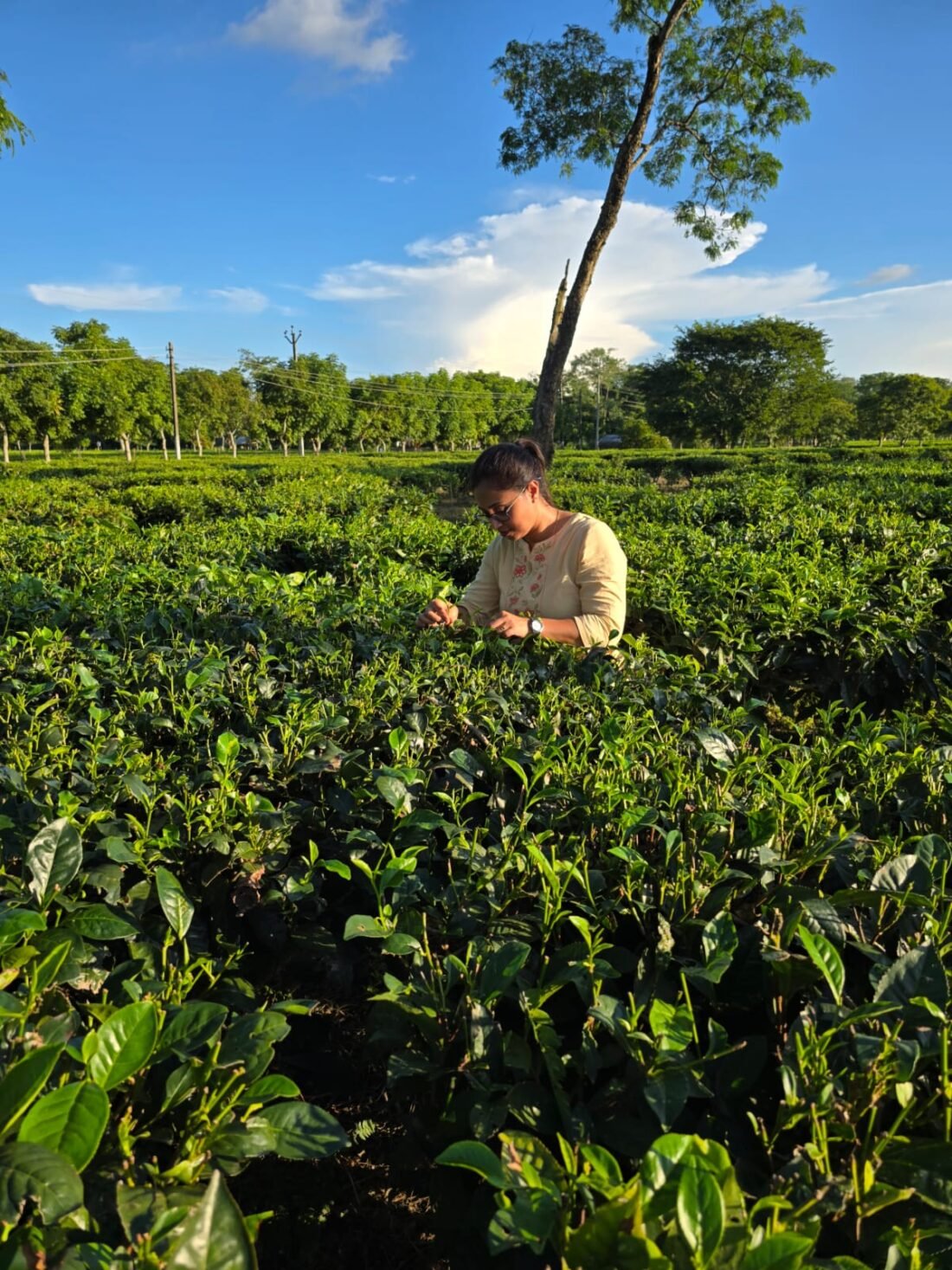
Kohima: In a development that could redefine India’s tea economy and wellness industry, a multi-institutional research team led by Nagaland University has discovered that tea blossoms—the often-discarded flowers of tea plants—harbor exceptional health and economic potential.
Traditionally, the global tea industry and scientific research have focused on tea leaves, the primary raw material for one of the world’s most consumed beverages. However, this study, conducted across seven premium tea cultivars in Assam, reveals that tea blossoms are rich in bioactive compounds capable of supporting cognitive wellness, stress relief, and antioxidant health.
This marks the first systematic biochemical analysis of tea blossoms in Assam, one of the world’s largest tea-producing regions. The findings open an entirely new avenue for India’s tea sector—one that combines scientific innovation, rural entrepreneurship, and sustainable development.
Tea blossoms, usually shed and discarded during the harvest season, were long considered agricultural waste. But researchers have now identified high levels of polyphenols, catechins, terpenoids, and L-theanine—key compounds associated with mental clarity, stress reduction, and heart health. The blossoms also contain lower caffeine than leaves, making them ideal for use in nutraceuticals, functional beverages, and natural wellness products.
“Nutraceutical companies can harness tea blossom extracts to create energy boosters, relaxation aids, and skincare formulations,” explained Dr. Sagarika Das of the Centre for Biotechnology and Bioinformatics, Dibrugarh University, who led the study. “By repurposing tea blossoms, we can not only minimise agricultural waste but also create fresh income opportunities for rural communities and smallholder farmers.”
The project was spearheaded by Dr. Das in collaboration with Mr. Monoranjan Goswami, a renowned tea biochemist from Tocklai Tea Research Institute, and Prof. Tanmoy Karak, a soil science expert at Nagaland University. The team also included Ranjit Kumar Paul, Md. Yeasin, Animesh Sarkar, C.S. Maiti, Saumik Panja, Manoj Dutta, and Jiban Saikia, bringing together an interdisciplinary force in the study of plant bioresources.
The findings have implications far beyond laboratories. For Assam and Nagaland—where tea cultivation sustains millions of livelihoods—the research opens up new pathways for value addition and rural innovation. Collecting and processing tea blossoms could become a parallel income source for small tea growers, promoting circular bioeconomy and waste-free farming.
Prof. Jagadish K. Patnaik, Vice Chancellor of Nagaland University, hailed the research as a model for translational science—turning local resources into global opportunities.
“This research demonstrates how innovation rooted in our region can drive global impact,” Prof. Patnaik said. “By tapping into the overlooked potential of tea blossoms, our scientists are paving the way for new wellness industries while empowering rural communities. It’s a beautiful confluence of science, sustainability, and social development.”