Loktak’s Silent Suffering: Nagaland University Study Exposes How Land Use Patterns Are Poisoning Manipur’s Iconic Lake
EduNe Bureau
Kohima: A recent study by researchers from Nagaland University has raised a serious environmental alarm over the deteriorating health of Loktak Lake, India’s largest freshwater lake and one of its most treasured ecological sites. The study reveals that agricultural expansion, human settlements, and shifting cultivation within the Loktak catchment area are directly contaminating the rivers that feed the lake — a system already under immense ecological strain.
Led by Dr. Eliza Khwairakpam, Assistant Professor at the Department of Environmental Science, Nagaland University, the research has been published in the International Journal of Environment and Pollution (DOI: 10.1504/IJEP.2025.148717). The findings establish a strong scientific link between land use and water quality degradation in the Loktak Lake basin, underscoring the urgent need for community-based land management and stricter regulation of agricultural runoff and waste disposal.
“Our study confirms that land use decisions across villages and forest landscapes upstream are directly impacting water quality downstream. This makes community-based land management and stricter control of agricultural runoff and waste discharge crucial for restoring Loktak Lake,” said Dr. Khwairakpam.
Rivers under stress
The research team conducted extensive field sampling across nine major rivers — Khuga, Western, Nambul, Imphal, Kongba, Iril, Thoubal, Heirok, and Sekmai — that drain into Loktak Lake. By combining Land Use Land Cover (LULC) mapping with water quality indicators such as dissolved oxygen (DO), biological oxygen demand (BOD), and temperature, the team identified the key stress points in the catchment.
The study found the Nambul River to be the most polluted, registering low oxygen levels and high organic contamination. Researchers linked this directly to 47% agricultural land and 11% settlement area in its sub-catchment. The Khuga River showed similarly poor water quality, largely due to extensive Jhum (shifting) cultivation, which accounted for nearly 42% of land use in the region.
In contrast, rivers such as Iril and Thoubal, flowing through forest-dominated landscapes, exhibited better water quality, highlighting the protective role of natural vegetation in maintaining river health.
Loktak: A lake under siege
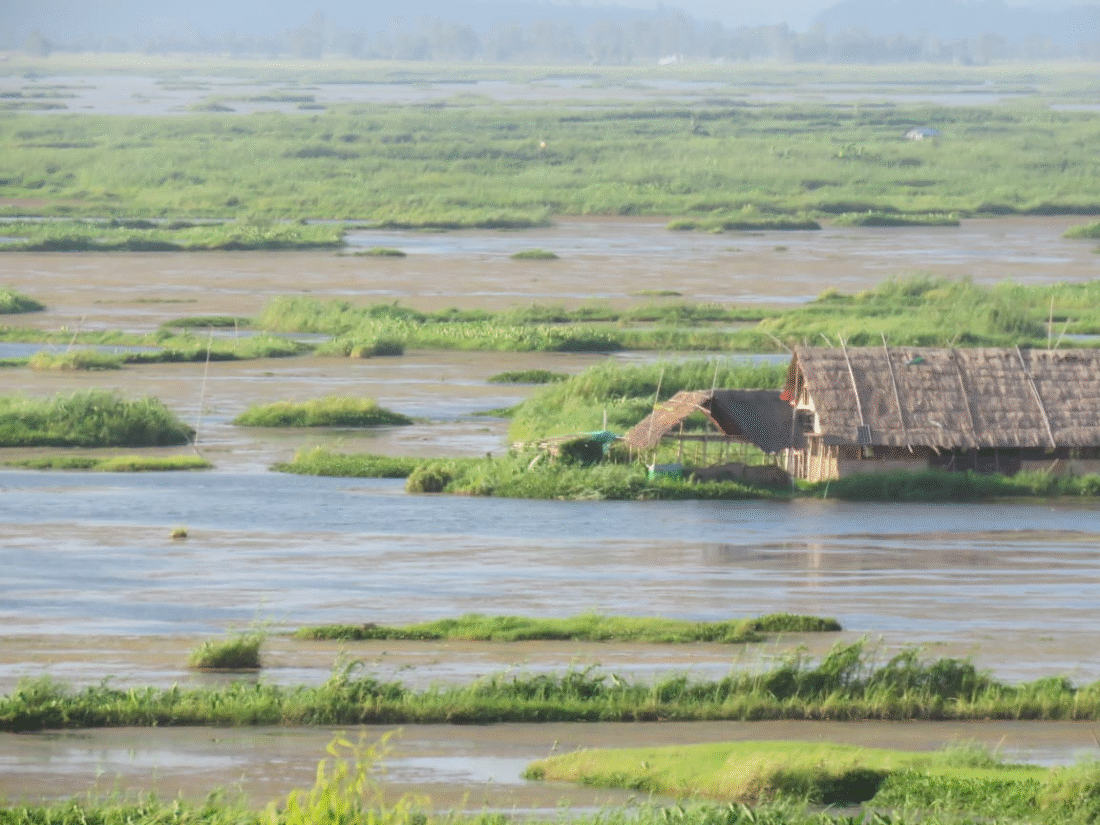
Once celebrated as the lifeline of Manipur, Loktak Lake today finds itself on the Montreux Record — a global list of wetlands facing serious ecological degradation. Home to 132 plant species and 428 animal species, including the endangered Sangai deer found only in the Keibul Lamjao National Park, the lake supports fisheries, hydropower, transport, and tourism.
However, decades of unregulated land use, encroachment, and pollution have altered its hydrology and biodiversity. Rising sedimentation, shrinking fish populations, and declining water quality have turned this once-thriving ecosystem into a cautionary tale of environmental neglect.
“Land management is not just an environmental concern but a livelihood protection strategy for the people of Manipur. Catchment-wide regulation, sustainable agriculture, and controlled Jhum cycles are vital for protecting India’s only floating national park,” Dr. Khwairakpam emphasized.
University’s commitment to environmental stewardship
Commending the research, Prof. Jagadish K. Patnaik, Vice Chancellor of Nagaland University, said,
“Nagaland University takes great pride in the significant research contribution made by our faculty and scholars. This study highlights the pressing environmental challenges arising from agricultural runoff, human settlements, and shifting cultivation, which are directly impacting river water quality in the region. We remain committed to promoting research-driven environmental stewardship that informs policy, fosters sustainable livelihoods, and safeguards our natural ecosystems.”
Collaborative effort
The research received field and technical support from the Forest Department, Government of Manipur, and the Manipur Pollution Control Board, with institutional collaboration from IIT Delhi.
Background: Why the Loktak Lake matters
Located near Moirang in Manipur’s Bishnupur district, Loktak Lake spans approximately 287 sq. km and is often described as “the lifeblood of Manipur.” It is globally renowned for its phumdis — floating biomass formations that sustain unique flora and fauna. Declared a Ramsar Site in 1990, Loktak is of international ecological importance under the Ramsar Convention on Wetlands, an intergovernmental treaty signed in Ramsar, Iran, in 1971, to protect and use wetlands sustainably.
Despite this recognition, Loktak’s inclusion in the Montreux Record reflects a grim reality: the lake is fast losing its resilience to human-induced pressures.
As Dr. Khwairakpam’s research makes clear, the fate of Loktak Lake — and of Manipur’s communities who depend on it — rests on how wisely the region manages its land and water today.