Nagaland University Study Sounds Alarm on Rapid Soil Degradation in Dhansiripar, Calls for Urgent Sustainable Land Management

Kohima: A major multi-institutional study led by Nagaland University has revealed alarming levels of soil degradation across the Dhansiripar region, warning that accelerating land-use changes are severely undermining soil fertility, structural stability, and long-term agricultural sustainability.
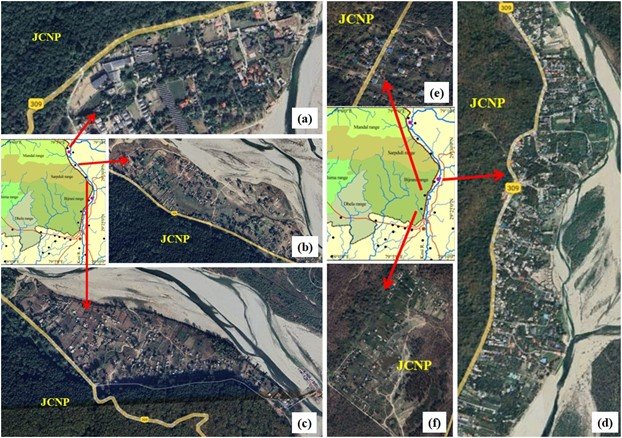
The study, conducted across six villages—Amaluma, Dhansiripar, Doyapur, Kiyeto, Melongmen and Razhaphe—provides one of the most comprehensive assessments of soil health in the region.
Researchers documented strongly acidic soils, weakening structural stability, sharp variations in nutrient availability, and a heightened risk of erosion—concerns that local farmers had already raised during preliminary field interactions.
Kohima: A major multi-institutional study led by Nagaland University has revealed alarming levels of soil degradation across the Dhansiripar region, warning that accelerating land-use changes are severely undermining soil fertility, structural stability, and long-term agricultural sustainability.
The study, conducted across six villages—Amaluma, Dhansiripar, Doyapur, Kiyeto, Melongmen and Razhaphe—provides one of the most comprehensive assessments of soil health in the region.
Researchers documented strongly acidic soils, weakening structural stability, sharp variations in nutrient availability, and a heightened risk of erosion—concerns that local farmers had already raised during preliminary field interactions.
The collaborative effort brought together experts from Nagaland University, ICAR–Indian Agricultural Statistics Research Institute (IASRI), University of California San Francisco, Dibrugarh University, Tocklai Tea Research Institute, and Diphu Medical College & Hospital. Their findings have been published in the international peer-reviewed journal Environmental Monitoring and Assessment (Springer).
“The evidence is clear—Dhansiripar’s soils are under stress,” said Prof. Jagadish K. Patnaik, Vice Chancellor of Nagaland University.
“With strongly acidic soils and declining structural stability, immediate adoption of sustainable land-management practices is critical to safeguard agricultural productivity and protect the environment.”
Kohima: A major multi-institutional study led by Nagaland University has revealed alarming levels of soil degradation across the Dhansiripar region, warning that accelerating land-use changes are severely undermining soil fertility, structural stability, and long-term agricultural sustainability.
The study, conducted across six villages—Amaluma, Dhansiripar, Doyapur, Kiyeto, Melongmen and Razhaphe—provides one of the most comprehensive assessments of soil health in the region.
Researchers documented strongly acidic soils, weakening structural stability, sharp variations in nutrient availability, and a heightened risk of erosion—concerns that local farmers had already raised during preliminary field interactions.
The collaborative effort brought together experts from Nagaland University, ICAR–Indian Agricultural Statistics Research Institute (IASRI), University of California San Francisco, Dibrugarh University, Tocklai Tea Research Institute, and Diphu Medical College & Hospital. Their findings have been published in the international peer-reviewed journal Environmental Monitoring and Assessment (Springer).
“The evidence is clear—Dhansiripar’s soils are under stress,” said Prof. Jagadish K. Patnaik, Vice Chancellor of Nagaland University.
“With strongly acidic soils and declining structural stability, immediate adoption of sustainable land-management practices is critical to safeguard agricultural productivity and protect the environment.”
“The evidence is clear—Dhansiripar’s soils are under stress,” said Prof. Jagadish K. Patnaik, Vice Chancellor of Nagaland University.
“With strongly acidic soils and declining structural stability, immediate adoption of sustainable land-management practices is critical to safeguard agricultural productivity and protect the environment.”