New Delhi: Nearly one in three students in India is dependent on private coaching to supplement formal education, according to the latest Comprehensive Modular Survey (CMS) on Education released by the Ministry of Statistics and Programme Implementation.
The findings are part of the 80th edition of the National Sample Survey (NSS), which covered 52,000 households and more than 58,000 students across the country, providing one of the most detailed pictures of India’s learning landscape in recent years.
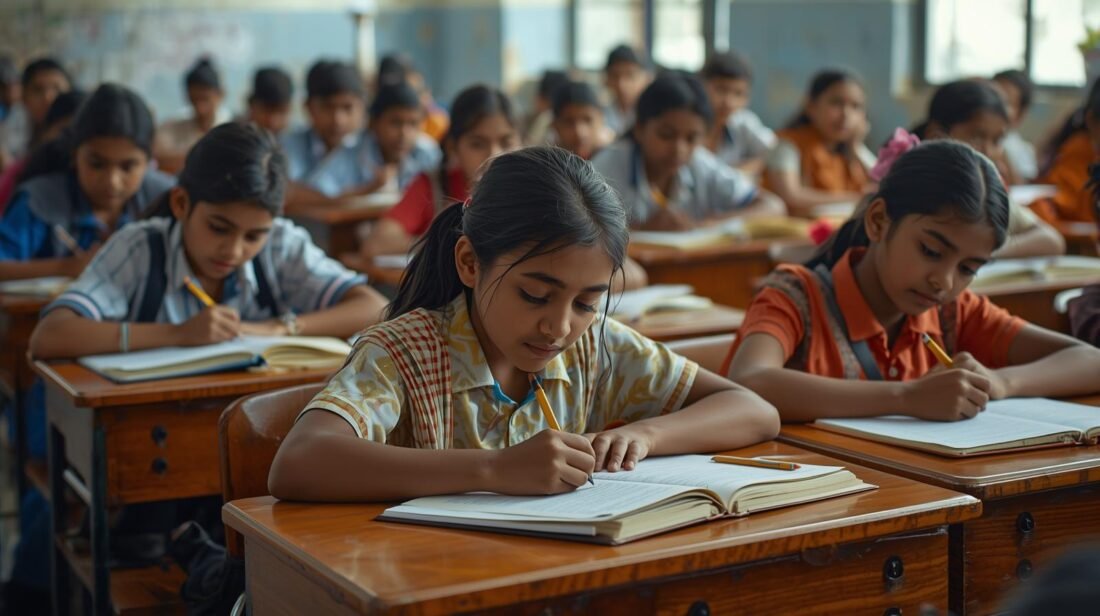
The survey underscores a stark divide in how students access education in rural and urban areas. While government schools account for 55.9% of total enrolments nationwide, they continue to serve as the backbone of rural education, with nearly two-thirds of all children in villages attending them.
In contrast, urban India tells a very different story, with only 30.1% of children enrolling in government schools. The majority turn to private institutions, which now account for one-third of overall enrolments nationwide.
The study revealed that 27% of all students take private coaching classes—an increasingly common phenomenon across the country. The prevalence is notably higher in urban centres, where 30.7% of students attend coaching, compared to 25.5% in rural regions.
The financial burden of such supplemental learning is also significant. The survey found that coaching costs rise steeply with the level of education—from an average of Rs 525 at the pre-primary stage to Rs 6,384 at the higher secondary level.
This sharp escalation highlights the rising pressure on families to invest in private tuition as students progress academically, particularly in classes leading up to competitive examinations.
Experts say the surge in demand for coaching is closely tied to India’s exam-driven education system, particularly for engineering, medicine, management, and government job aspirants. From Kota in Rajasthan, known as the “coaching capital,” to mushrooming neighbourhood tuition centres in small towns, private coaching has effectively become a parallel education industry worth thousands of crores.
While critics argue that this trend reflects shortcomings in mainstream schooling—such as overcrowded classrooms, teacher shortages, and uneven quality—many parents see coaching as essential for their children to remain competitive. “It has become less of a choice and more of a necessity,” says an education researcher based in Delhi, pointing out that even primary school children are increasingly pushed into extra classes.
The survey also highlights a social and economic dimension. While rural families, especially those from lower-income backgrounds, continue to rely heavily on free or subsidised government schools, the additional cost of coaching often stretches household budgets. Urban families, although better off on average, face mounting expenses as tuition fees for both schools and coaching institutes climb simultaneously.
Education experts warn that the growing dependence on private coaching raises questions about the effectiveness of India’s formal schooling system. The survey’s findings, they argue, call for renewed efforts to strengthen government schools, improve teacher quality, and bridge learning gaps. Without such reforms, private coaching will continue to grow as a de facto second tier of education, deepening inequities in access and outcomes.
The NSS data also arrives at a time when policymakers are debating how to align India’s school system with the National Education Policy (NEP) 2020, which promises holistic learning, reduced exam pressure, and greater inclusivity. However, as the survey shows, the ground reality suggests that for millions of families, private tuition remains the insurance policy against perceived deficiencies in mainstream education.