Nagaland University’s New Ginger Breakthrough ‘SAS-KEVÜ’ Promises to Transform Farmer Incomes and Strengthen India’s Spice Chain
EduNe Bureau
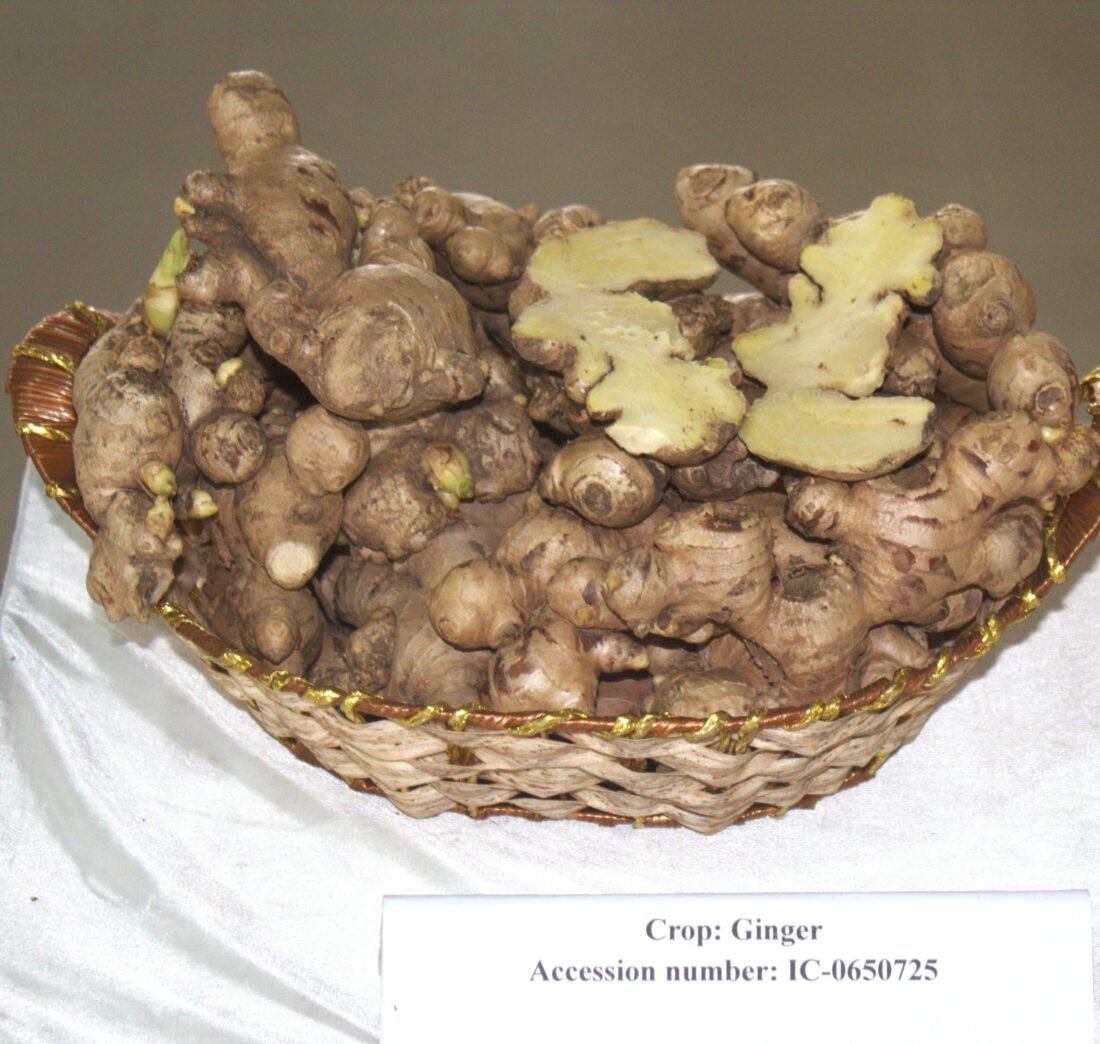
Kohima: Nagaland University has achieved a landmark breakthrough in agricultural research with the development of SAS-KEVÜ, a high-yield, low-fibre ginger variety that has now received national notification from the Government of India. As the first ginger variety to be developed by a research institute in the Northeast, SAS-KEVÜ is set to play a transformative role in the region’s agricultural economy and significantly boost India’s ginger value chain.
The variety is the product of nearly ten years of rigorous work carried out under the All India Coordinated Research Project (AICRP) on Spices at Nagaland University. Led by Prof. C. S. Maiti and Dr. Graceli I. Yepthomi of the School of Agricultural Sciences, the project began in 2014 with the collection of nineteen local Nadia ginger clones from across the state. Detailed studies on their morphological and biochemical traits revealed one exceptional clone—initially named NDG-11—showing superior performance across multiple parameters. This clone eventually evolved into SAS-KEVÜ, named to reflect its regional identity and scientific legacy.
After its selection, SAS-KEVÜ underwent a demanding multi-location evaluation process between 2018 and 2022 across seven AICRP centres in India, including Chintapalle in Andhra Pradesh, Kozhikode in Kerala, Mizoram, Potangi in Odisha, Pundibari in West Bengal, Nagaland itself and Sikkim. The variety demonstrated remarkable stability and adaptability during the trials. Advanced analyses, such as GGE Biplot evaluations, confirmed its ability to thrive across diverse agro-climatic regions, with exceptional performance recorded in Nagaland, Pundibari and Chintapalle.
The variety’s notification by the Sub-Committee on Crop Standards, Notification and Release of Varieties (Horticultural Crops) under the Ministry of Agriculture and Farmers Welfare was officially published in the Gazette of India on 2 September 2025. The approval allows SAS-KEVÜ to be produced and sold for agricultural use in Nagaland, Mizoram, West Bengal and Andhra Pradesh under the Seeds Act, 1966.
What makes SAS-KEVÜ especially significant is its combination of high yield and market-friendly traits. With a potential yield of 17.21 tonnes per hectare, the variety surpasses the national check variety by over nine per cent. Its dry matter recovery of 21.95 per cent gives it a distinct advantage for processors who depend heavily on dry ginger output, making it ideal for industries producing ginger powder, ginger flakes, candy and paste. The rhizomes themselves are bold, soft-textured and lemon-yellow with significantly lower fibre content, enhancing consumer appeal in both fresh and processed forms. The crop completes its cycle in nine months, fitting smoothly into the production calendars of ginger-growing regions.
Nagaland University Vice Chancellor Prof. Jagadish K. Patnaik lauded the achievement, calling SAS-KEVÜ a symbol of scientific excellence and regional innovation. He said the variety reflects years of coordinated research and collaboration among scientists and partner institutions across India. According to him, SAS-KEVÜ will not only enhance farmer incomes but also reinforce India’s spice economy by offering a stable, high-quality raw material for the food processing sector. He emphasised that the university remains committed to supporting sustainable horticulture and improving the livelihoods of farming communities in the Northeast and beyond.
For the researchers behind the innovation, SAS-KEVÜ represents a culmination of scientific dedication and a meaningful contribution to the region’s agricultural resilience. Prof. Maiti recalled the painstaking work of identifying, refining and evaluating the clone, while Dr. Yepthomi underlined the significance of its national notification, which both validates the scientific process and opens the door for its large-scale commercial adoption.
The release of SAS-KEVÜ marks a turning point not only for Nagaland University but also for the Northeast, where ginger has long been an integral cash crop for tribal farming communities. By offering a high-yielding, low-fibre, market-ready variety adapted to the region’s climate, the university aims to reduce post-harvest losses, increase market value and strengthen India’s expanding ginger-based industries. Preparations have already begun at the university to multiply seed rhizomes so that farmers can access planting material ahead of the coming growing season.
With SAS-KEVÜ, Nagaland University has positioned itself at the forefront of spice crop innovation, providing farmers with a variety that promises better returns, greater resilience and a stronger connection to national value chains. As production scales up, the new variety is expected to play a pivotal role in reshaping ginger cultivation across the Northeast and other notified states, contributing to both agricultural progress and economic empowerment.