IIT Guwahati Pushes Rural Innovation with RuTAG 2.0 Review Meet, Launches Two New Research Centres
EduNe Bureau
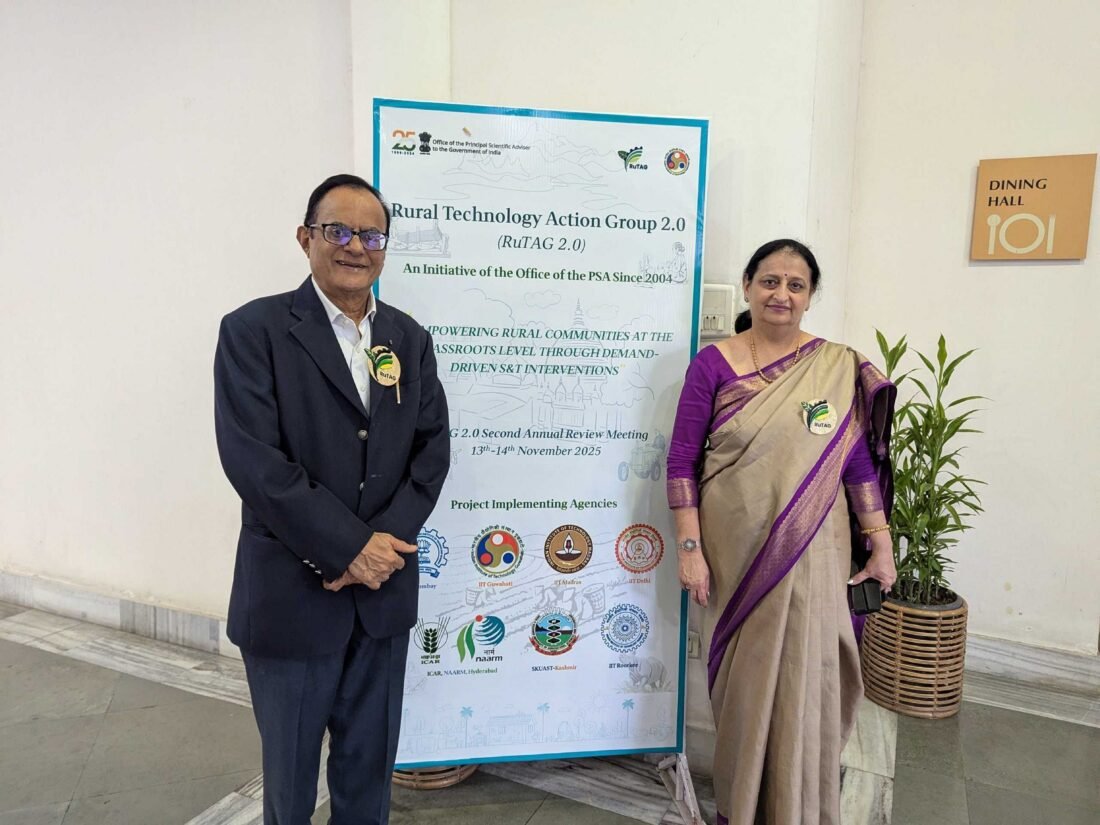
Guwahati: The Indian Institute of Technology Guwahati reaffirmed its commitment to driving grassroots technological development as it hosted the Second Annual Review Meeting of Rural Technology Action Group (RuTAG) 2.0. The two-day event, organised under the Office of the Principal Scientific Adviser (PSA) to the Government of India, brought together leading researchers, innovators and policymakers to evaluate rural technology projects being implemented across the country.
The meeting was held in the esteemed presence of Prof. A.K. Sood, Principal Scientific Adviser to the Government of India, who attended as the chief guest. Also present were Dr. Parvinder Maini, Scientific Secretary at the PSA Office; Dr. Rakesh Kaur, Adviser/Scientist ‘G’; Prof. Devendra Jalihal, Director of IIT Guwahati; Registrar Krishnan Kumar Tiwari; and senior faculty members from the institute.
Welcoming the participants, Prof. Jalihal emphasised the institute’s growing role in developing technologies that make a real difference to rural communities. He said the collective efforts of innovators and researchers have strengthened the experience needed to scale rural technologies for wider impact.
The RuTAG 2.0 platform, initiated by the PSA’s Office, aims to bridge the gap between scientific research and grassroots needs by supporting the development of affordable and locally adaptable technologies. This year’s review meeting is focused on assessing progress in ongoing projects, their social impact, and the possibilities for large-scale deployment.
Speaking at the event, Prof. Sood highlighted the importance of diffusion, standardisation, documentation and validation of rural technologies if India aims to create long-lasting change. He outlined the vision of establishing Rural Science and Technology Partnership Centres that can serve as hubs for 25 to 40 surrounding villages, equipped with tools such as soil health management systems and satellite-based data. He called on all contributors to work together to ensure that innovations move beyond pilot regions and reach larger rural populations.
An exhibition showcasing grassroots innovations from various RuTAG centres across India was also organised, featuring solutions developed for agriculture, rural livelihoods, water and energy management, and climate-resilient practices. Dr. Parvinder Maini stressed that the rural sector remains the backbone of the Indian economy and said technologies developed under RuTAG 2.0 must now focus on market readiness, commercialisation, and deployment. She noted that the Northeast holds immense potential for sustainable innovation and urged participants to prioritise data-driven outcomes while addressing challenges such as climate change.
A major highlight of the event was the inauguration of two new interdisciplinary research centres under the School of Agro and Rural Technology (SART) at IIT Guwahati. The Centre for Innovation in Agri and Aqua Voltaics and the Integrated Facility for Wellness-Product Innovation aim to open up new livelihood opportunities by promoting sustainable agriculture, innovative aquaculture practices, and wellness-based rural enterprises.
The two-day meeting features presentations from RuTAG centres across the country, including IIT Delhi, IIT Bombay, IIT Roorkee, IIT Madras, SKUAST-Kashmir and ICAR–NAARM, focusing on grassroots technology development and rural entrepreneurship. The first day also included a drone demonstration highlighting applications in rural mapping and crop monitoring. Discussions on policy, technology standardisation, and implementation strategies will continue on the second day with participation from academia, industry and government representatives.